
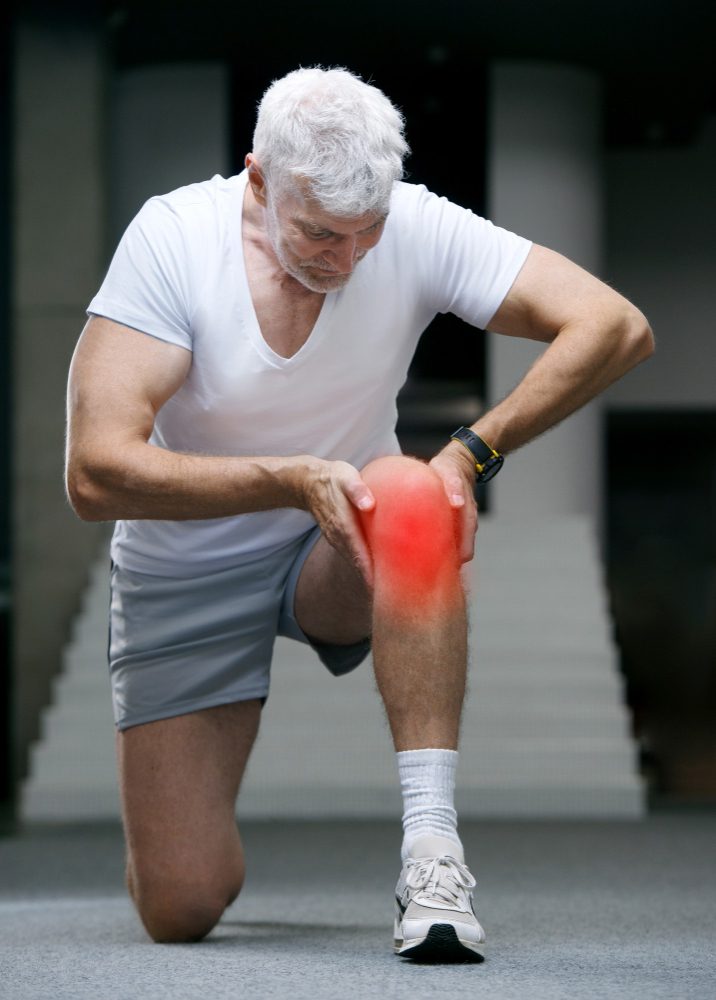
For decades, millions of Australians experiencing joint stiffness have been told that their pain is simply the result of mechanical “wear and tear.” This phrase conjures up images of bones grinding together, leaving many feeling anxious that movement will cause further damage and driving them straight toward invasive surgeries.
However, a landmark update to the clinical guidelines from the Australian Commission on Safety and Quality in Health Care has issued a global wake-up call: most people living with knee osteoarthritis can successfully control their pain and completely reclaim their mobility without ever going under the knife.
The Massive Scale of Osteoarthritis in Australia
Osteoarthritis is the nation’s most common joint disease, affecting roughly 2.1 million Australians and costing the economy an estimated $4.3 billion every year. While it frequently targets the knees, it also compromises the hips, spine, hands, and feet.
Rather than just affecting a single layer of cartilage, osteoarthritis impacts the entire ecosystem of the joint, including the surrounding bone, ligaments, and supporting muscles. For many, it turns simple daily tasks like walking or climbing stairs into a painful hurdle.
Why X-Rays Don’t Tell the Whole Story
One of the most groundbreaking shifts in modern orthopaedic medicine is the realization that structural damage visible on an X-ray does not correlate with the level of pain or disability a person actually experiences.
Clinical research consistently shows a fascinating paradox:
- Some patients present with high levels of structural joint wear on an X-ray but experience minimal, negligible symptoms.
- Other patients experience severe, debilitating pain despite their scans showing a very low degree of structural wear.
Because of this, peak medical bodies agree that X-rays are not strictly required to diagnose knee osteoarthritis or dictate treatment paths. Furthermore, telling patients their joints are “wearing out” actively causes harm—making them fearful of physical activity and prematurely encouraging them to seek unnecessary keyhole surgeries.
What Does Actually Work? The Non-Surgical Blueprint
The updated Australian guidelines emphasize that non-surgical treatments work incredibly well for the vast majority of people, regardless of their age or how advanced their symptoms might seem.
The clinical standard outlines three primary, non-invasive pillars:
1. Education and Reassurance
Dispelling misconceptions is the first step to healing. When healthcare professionals use positive, reassuring language, patients lose their fear of movement. Understanding how the joint functions and learning evidence-based self-management strategies is proven to drastically alter a patient’s long-term prognosis.
2. Targeted Physical Activity
Many sufferers avoid exercise out of fear that it will degrade the joint further. In reality, structured movement is entirely safe, actively reduces pain, and carries far fewer side effects than common anti-inflammatory medications.
A wide variety of movement patterns are highly effective, including:
- Targeted strength training to build the supporting muscles around the joint.
- Low-impact aerobic exercises like walking or cycling.
- Mindful movement practices like Yoga and Tai Chi.
Ultimately, building up these surrounding muscle groups acts as a natural shock absorber, successfully preventing or significantly delaying the need for joint replacements down the track.
3. Weight Management and Metabolic Health
For individuals carrying extra weight, managing nutrition is a powerful tool. Because extra body weight drastically multiplies the physical load traveling through the knee joint, losing as little as 5% to 10% of total body weight has been shown to rapidly alleviate physical pressure, reduce systemic internal inflammation, and eliminate daily disability.
What About Surgery?
The new national care standard urges a major re-evaluation of common surgical procedures:
- Knee Arthroscopy (Keyhole Surgery): Historically used to clean up damaged pieces of bone or cartilage, high-quality international research has now proven that arthroscopy is not effective for osteoarthritis. The guidelines explicitly state it should not be utilized.
- Joint Replacement Surgery: While over 53,000 Australians undergo knee replacements annually, the new care standard dictates it should only be considered a last resort for individuals with severe symptoms who have already comprehensively exhausted non-surgical exercise and lifestyle treatments.
Our Clinic’s Take
This national care standard represents everything we stand for. We don’t treat an X-ray; we treat the person. Our integrated team—combining medical triage, expert physiotherapy, structured exercise physiology, and targeted dietetics—is specifically built to deliver the exact non-surgical standard of care recommended by Australia’s peak health authorities.
You don’t have to accept joint pain as an inevitable downward spiral. Contact our Gold Coast care coordination team today to explore how we can help you keep moving safely, confidently, and on your own terms.
References & Sources
Lawford, B., Ferreira, G., Zadro, J., & Hinman, R. (2024). Do you have knee pain from osteoarthritis? You might not need surgery. Here’s what to try instead – ABC News